Quick Answer
A prior permit application on a property — even an abandoned one — contains confirmed answers that don’t appear on the current zoning card: utility sizing, parking compliance status, setback documentation, and infrastructure requirements confirmed by the jurisdiction. In Redmond, Oregon, a commercially zoned parcel with a pre-existing residence may hold grandfathered residential construction rights simultaneously with commercial zero setback regulations — a combination that creates more construction flexibility than a standard residential parcel. Permit history review is the fastest way to know what a site can carry before any builder meeting.
Two investors bought a property to build an ADU. Before they called a builder, they ordered a SiteFacts due diligence report.
That report found an abandoned permit application from a prior investor. The prior project never got built. The file was sitting in a records office, unread, with answers to questions these new owners did not yet know to ask.
Here is what they walked into their builder meeting with.
In some jurisdictions, a commercially zoned property with a pre-existing residence established before zoning laws took effect may retain grandfathered residential construction rights. This nonconforming use protection can allow residential development, including ADUs, and may simultaneously allow the zero setback regulations that commercial zoning provides. The answer depends entirely on your property’s history and local code. A due diligence report is how you find out before you commit to a builder conversation.
What These Investors Had Before the First Builder Call
These investors held a confirmed utility roadmap, a sized sewer lateral, and a validated ADU footprint before any builder stepped on site.
Confirmed power undergrounding requirement. The prior permit file documented it. Their electrician will know the scope on day one instead of discovering it during estimation.
Sewer lateral confirmed and sized. Not “there is a sewer connection nearby.” Sized. A builder can design to a confirmed specification rather than a placeholder assumption.
Parking requirements: already permitted and completed. A prior investor did that work before their project stalled. The current owners inherited the completion. On that checklist, it is done.
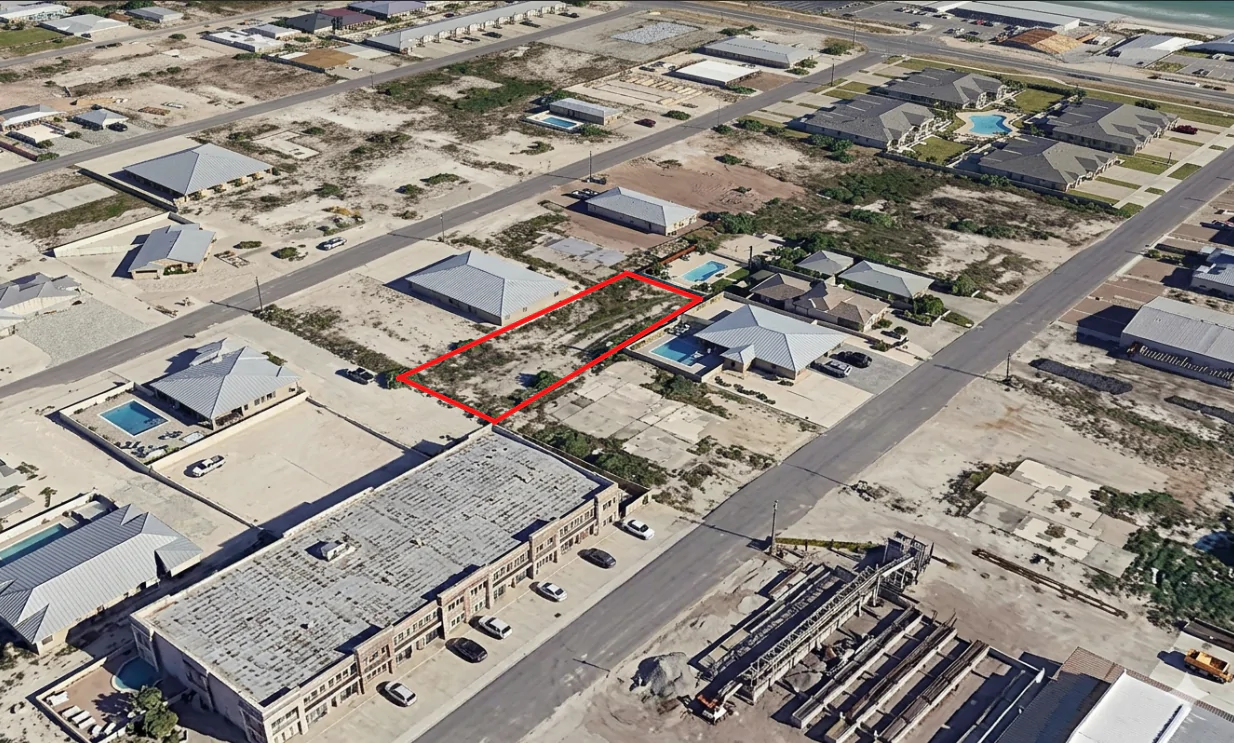
ADU footprint validated. The SiteFacts team drove to the property, located the property pins, and walked the right-of-way boundary. The yard appeared larger than it was. The actual dimensions were confirmed on site, and the ADU concept fits within them.
Four items that would otherwise require significant back-and-forth, each needing a separate agency inquiry, confirmed before the first builder meeting.
The Dual-Zone Condition Nobody Told Them About
Commercially zoned properties with a pre-existing residential structure are not rare. They appear on investor lists regularly, often priced below comparable residential parcels because buyers do not know how to value the zoning situation.
This property was commercially zoned. Most investors see that on a property sheet and either pass on the deal or spend significant time trying to figure out what it means for a residential project.
The due diligence report found something most investors miss entirely.
A pre-existing residence had been established on the property before the current zoning laws took effect. That created a grandfathered nonconforming use. The property legally retains residential construction rights even under the commercial zone designation.
Don Healy confirmed this through direct permit file review and jurisdiction research on this property: the commercially zoned lot held both grandfathered residential construction rights and the commercial zone’s zero setback regulations simultaneously. This finding was evaluated against Redmond’s legal nonconforming use standards. That dual-zone condition, confirmed for this specific Redmond, Oregon property, created construction flexibility unavailable to purely residential parcels. Residential construction authority and commercial zero setback rules in the same parcel.
That combination is invisible without a permit history review. It does not appear on the current zoning card. It is not something the county assessor will volunteer. It lives in the history of the property. That history has to be pulled.
What the Permit File Confirmed That the Zoning Card Did Not
A prior investor had filed permit applications for a duplex on this lot. The project was never completed. The application went cold.
It was not irrelevant.
That abandoned file contained confirmed answers to four questions that would otherwise require separate agency inquiries to resolve:
Power undergrounding: documented in the prior application. The requirement is known before the project starts, not discovered during electrical rough-in.
Sewer lateral: confirmed and sized in the prior records. No uncertainty about the connection or its capacity.
Parking compliance: permitted and completed under the prior permit effort. That item is crossed off the jurisdictional checklist before the new owners file anything.
Setback documentation: the commercial zoning’s zero setback regulations, confirmed against the grandfathered residential use, gave the owners more construction envelope than a standard residential parcel would have provided.
One file pull. Four confirmed items. No separate agency inquiries required. In Redmond, Oregon. (Nonconforming use protections are property- and jurisdiction-specific. These were confirmed through the permit history review and jurisdiction research on this specific property, not as a generalized code rule.)
What the Site Visit Confirmed That the Report Could Not
A report tells you what the records say. A site visit tells you what is on the ground. They are not always the same thing.
The SiteFacts team drove to the property and physically located the property pins. That revealed where the right-of-way sat relative to the actual lot boundary. The yard appeared larger than it actually was. The visual perception of the lot did not match the recorded dimensions.
The correction was material. An ADU footprint designed around the wrong lot dimensions gets redesigned. In this case, the ADU concept was validated within the actual dimensions before any designer or builder was engaged.
The owners did not discover the lot boundary discrepancy in a builder’s office. They knew before the meeting.
What an Investor Gets From a SiteFacts Report
A SiteFacts report gives an investor a confirmed utility roadmap, a permit history review, and validated lot dimensions before the first builder meeting. That is the short version.
The standard investor sequence: buy a property, form a concept, call a builder, then find out what the obstacles are. The obstacles arrive late, after the project has momentum and the budget is already mentally committed.
A SiteFacts report restructures that sequence.
The report pulls the permit history. Not just the current zoning card, but every application anyone ever filed on the property. It surfaces what was confirmed, what was completed by prior owners, what is still required, and what the zoning history means for what you can build.
The site visit confirms what the records cannot. Where the pins actually are, where the ROW sits, and whether the concept fits the real dimensions of the lot.
By the time these owners sat down with a builder, they were not asking “can we build?” They were asking “here is what we want to build. What is your timeline and price?” Those are different conversations. One is exploratory. The other is transactional.
What they did not have to pay for: architectural drawings designed around the wrong lot dimensions, a builder consultation that ended with a zoning question, or a permit application filed without knowing the power had to go underground.
Not a longer research process. A shorter one, with better information, before anyone has committed to a scope or a design.
SiteFacts runs these reports every week for investors and builders across Oregon, Washington, and Idaho.
You provide the property address. SiteFacts pulls the permit history, reviews the utility records, and walks the site.
SiteFacts confirms your order within one business day of submission. A SiteFacts report delivers in 4–5 business days.
ADU rules for OR, WA & ID. The 7 hidden infrastructure costs. 10 due diligence questions. Delivered to your inbox immediately.
No spam. One email with your guide.
If you are under contract on an investment property and want to know what you can build before you talk to a builder, order a SiteFacts report at sitefactsreport.com. You will know the utility requirements, the jurisdictional checklist, the actual lot dimensions, and the construction envelope before the first builder meeting.
SiteFacts Case Data — Permit History Review, Redmond, OR
SiteFacts review of a commercially zoned Redmond, Oregon property with an existing residence confirmed through permit history pull and jurisdiction research: (1) grandfathered nonconforming residential use under Redmond’s legal nonconforming use standards, preserving residential construction rights despite commercial zoning; (2) commercial zero setback regulations applying simultaneously with grandfathered residential use rights — a combination unavailable to standard residential parcels; (3) power undergrounding requirement documented in an abandoned prior permit application; (4) sewer lateral confirmed and sized in prior records; (5) parking compliance permitted and completed by a prior investor. A site visit physically located property pins, confirming actual lot dimensions were smaller than the visual lot appearance — the ADU concept was validated within actual dimensions before any designer or builder was engaged. SiteFacts confirmed the order within one business day. Report delivered in 4–5 business days.
Source: SiteFacts site evaluation, Redmond, OR. sitefactsreport.com
Related Reading
What to Expect When You Apply for a Residential Building Permit in the Pacific Northwest — Understanding the full scope of permit requirements — including the ones that don’t appear on county checklists — before you apply saves entire construction seasons.
It Looked Like an Easy ADU. It Wasn’t. — Another ADU project that turned on a single infrastructure requirement confirmed through jurisdiction research before the investor committed to a builder or a budget.