Building Near Nature? Understanding Wildland Urban Interface Requirements
A home with nature as your neighbor comes with a rulebook most buyers never see until permitting. Here's what a WUI designation actually costs.
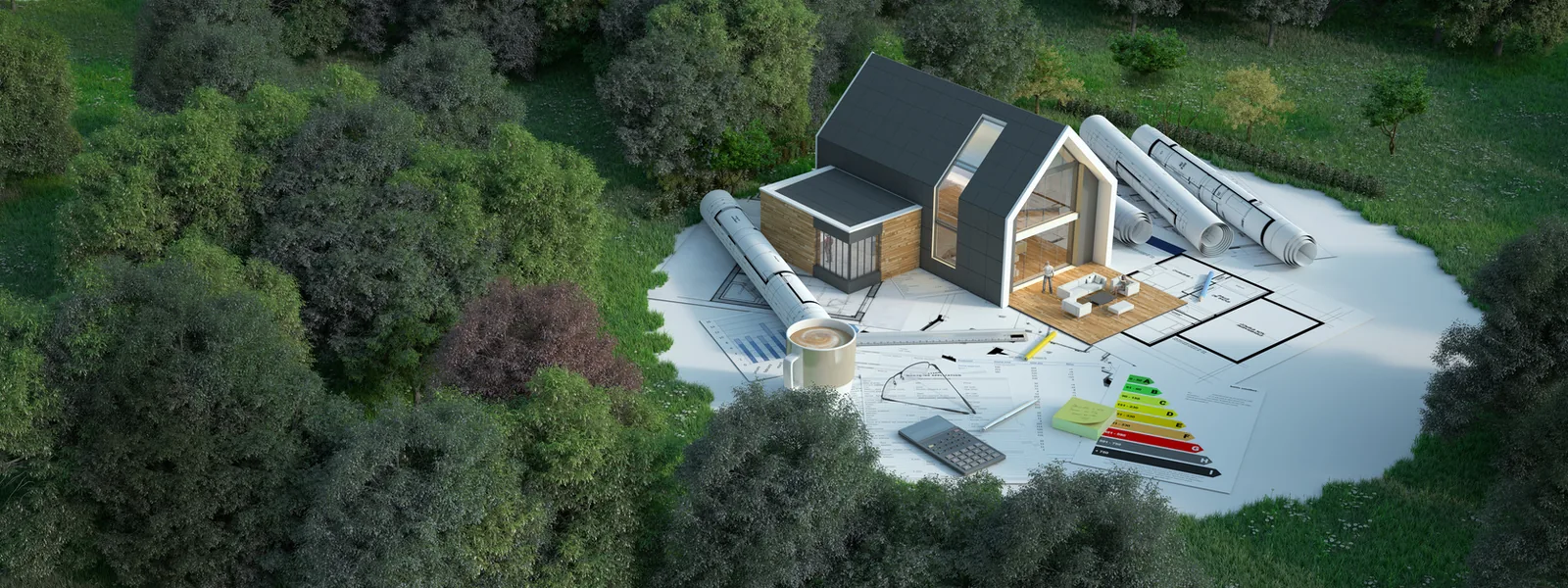
The Pacific Northwest’s forests, grasslands, and sage country keep pulling people out to build. But a home with nature as your neighbor comes with a rulebook most buyers never see until permitting: the Wildland Urban Interface, or WUI.
What counts as WUI
The Wildland Urban Interface is anywhere human development meets fire-prone vegetation: forests, grasslands, shrub-steppe, sagebrush, any natural fuel that can burn. You’re in one of two situations: an interface area, where your lot borders wildland on one side, or an intermix area, where natural vegetation surrounds you on multiple sides. Between 1990 and 2010, Washington alone saw a 41% increase in homes built near wildlands, and the trend keeps climbing.
What a WUI designation triggers
Building in a WUI zone changes how you build. Pacific Northwest codes require fire-resistive construction: Class A fire-rated roofing and siding, ember-resistant vent screening, 30 to 100 feet of defensible space around the structure, and fire access roads meeting IFC Section 503: a 20-foot minimum road width, 13.5 feet of vertical clearance, and a maximum 15% grade. In high-hazard zones, many jurisdictions require an NFPA 13D sprinkler system as a condition of permit approval.
The detail that catches buyers
WUI designation is parcel-specific. Two adjacent lots in the same neighborhood can carry different designations depending on vegetation proximity and how the local jurisdiction maps them, so a neighbor’s clean permit tells you nothing about yours. And the rules are tightening: Washington’s House Bill 1099 is one of several efforts to manage development in these zones more strictly.
Before you commit, confirm whether the parcel has fire protection services, what the local WUI code requires, and whether emergency vehicles can actually reach the building site.
Confirm WUI status before you buy
A SiteFacts report flags WUI designation and every requirement it triggers (construction, defensible space, and fire access) before you commit to a site.