Fire Access Requirements for Residential Property
The driveway is the part of a build most people treat as an afterthought. The fire marshal treats it as a permit condition, and it can cost six figures to fix late.
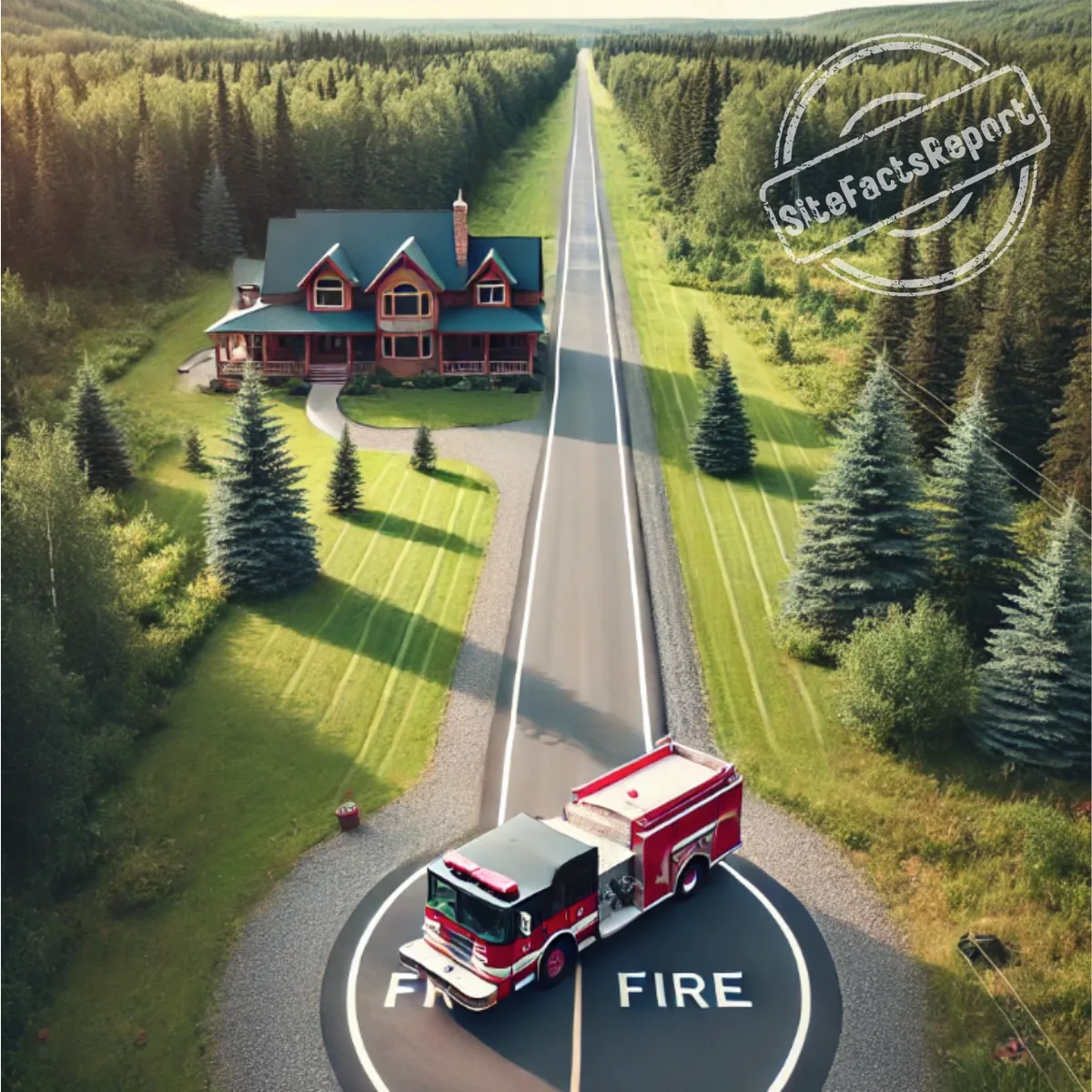
The driveway is the part of a build most people treat as an afterthought. The fire marshal treats it as a permit condition, and across the Pacific Northwest, jurisdictions now enforce fire access on infill and urban lots, not just remote ones.
The 150-foot rule
Under the 2021 International Fire Code (Section 503.1.1) and NFPA 1, fire apparatus roads must reach within 150 feet of all portions of the exterior walls of a home’s first story. That distance is measured along an approved, drivable route, not as a straight line across the lot. The rule applies regardless of lot size or zoning.
What the road itself has to do
- Width: 20 feet (12 feet allowed for one to two dwellings with local approval)
- Vertical clearance: 13 feet 6 inches
- Surface: all-weather, able to support a 75,000 lb live load and 12,500 lb point load
- Grade: 15% maximum (up to 18% with fire sprinklers and AHJ approval)
- Turnaround: required if the road exceeds 300 feet without a loop or secondary exit
- Turnouts: required if the driveway exceeds 400 feet: 10 feet wide by 30 feet long, every 400 feet
- Access distance: 150 feet maximum, or 250 feet with an approved sprinkler system
If access can’t be achieved, most jurisdictions require an NFPA 13D sprinkler system plus mitigation like on-site water storage or extended hose-lay capability.
Fire flow, when it applies
Water supply usually isn’t required inside a fire protection district with no special CC&Rs. Outside one, or in a WUI zone, or where CC&Rs mandate private protection, it can be: 1,000 GPM at 20 psi for one hour without sprinklers, 500 GPM at 20 psi for 30 minutes with NFPA 13D sprinklers, and up to 1,750 GPM in some WUI jurisdictions. Rural sites often follow NFPA 1142, which allows tanks or cisterns as alternate sources.
Before you design a driveway, verify the basics: Is the property in a fire district? Will any part of the structure sit more than 150 feet from the road? Can the driveway meet width, grade, and turnaround standards, and is there room on the lot for them?
Get ahead of the fire access curve
SiteFacts reviews fire district coverage, access distance, and driveway grade on any Pacific Northwest parcel before you design or commit.