Grading and Drainage: Why They Matter More Than You Think
Grading and drainage are the number-one post-move-in complaint in new construction, and the warning signs are visible on the first site walk. The drains PNW code requires, and the lots that make water.
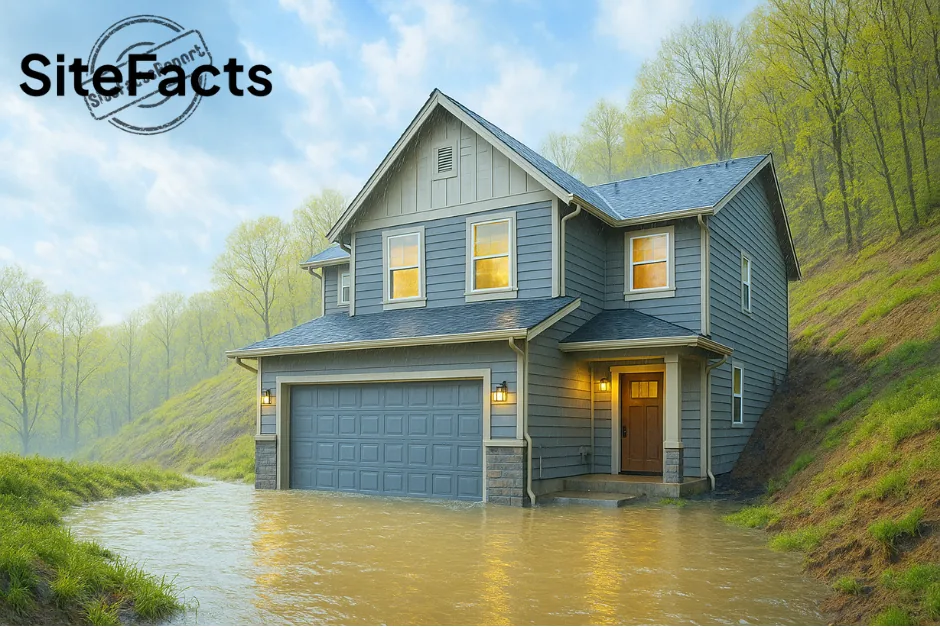
What you ignore at the first site visit is what your client will hate you for after move-in. Across hundreds of post-move-in surveys, grading and drainage top the list of homeowner complaints year after year, ahead of trim, paint, and mechanicals. It’s water: in garages, standing against foundations, pooling in backyards. And the warning signs were almost always there on day one.
The code baseline
Pacific Northwest codes require positive drainage away from the foundation: a minimum 2% slope for 10 feet from the structure. Three drainage systems are consistently required across western Oregon and Washington:
- Rain drains. Downspouts tied into underground piping that carries roof runoff to an approved discharge (drywell, swale, curb outlet, or public system). Standard in Lane, Multnomah, Clark, and Cowlitz Counties.
- Perimeter drains. Subsurface systems around the footing that protect the foundation, required around earth-retaining walls, basements, and crawlspaces.
- Low point drains. Remove water from the lowest point of a crawlspace, usually tied to the rain drain through a backflow preventer.
For specific site conditions, add the specialty drains: a French drain (perforated pipe in a fabric-wrapped gravel trench) or a shallower curtain drain to intercept subsurface and shallow groundwater on slopes; a trench drain for surface runoff across driveways and garage entries; and an area drain for isolated low spots in yards and courtyards.
The lots that make water
Snowmelt lakes in flat backyards, standing water against the foundation: none of it appears by magic after closing. It’s visible, or preventable, on day one. And because drainage disputes between adjacent parcels are one of the most common residential construction legal conflicts in Oregon and Washington, getting it wrong isn’t just a callback. It’s a liability.
Control water or pay later
These requirements live in permit conditions, not always on the pre-application checklist applicants receive. Plan the drainage at the first evaluation, not after a call from a customer standing ankle-deep in their new backyard “lake.” Grading and drainage problems aren’t cosmetic. They’re structural, expensive, and preventable.
Spot the water problems before they become callbacks
SiteFacts flags the slope, runoff, and drainage risks on a parcel early, while they're still cheap to design around.