Power Planning Guide: Electrical Service for Your New Home Build
Most first-time builders think power is a phone call to the utility. It's actually one of the longest-lead items in the whole build, and the number one cause of construction delays.
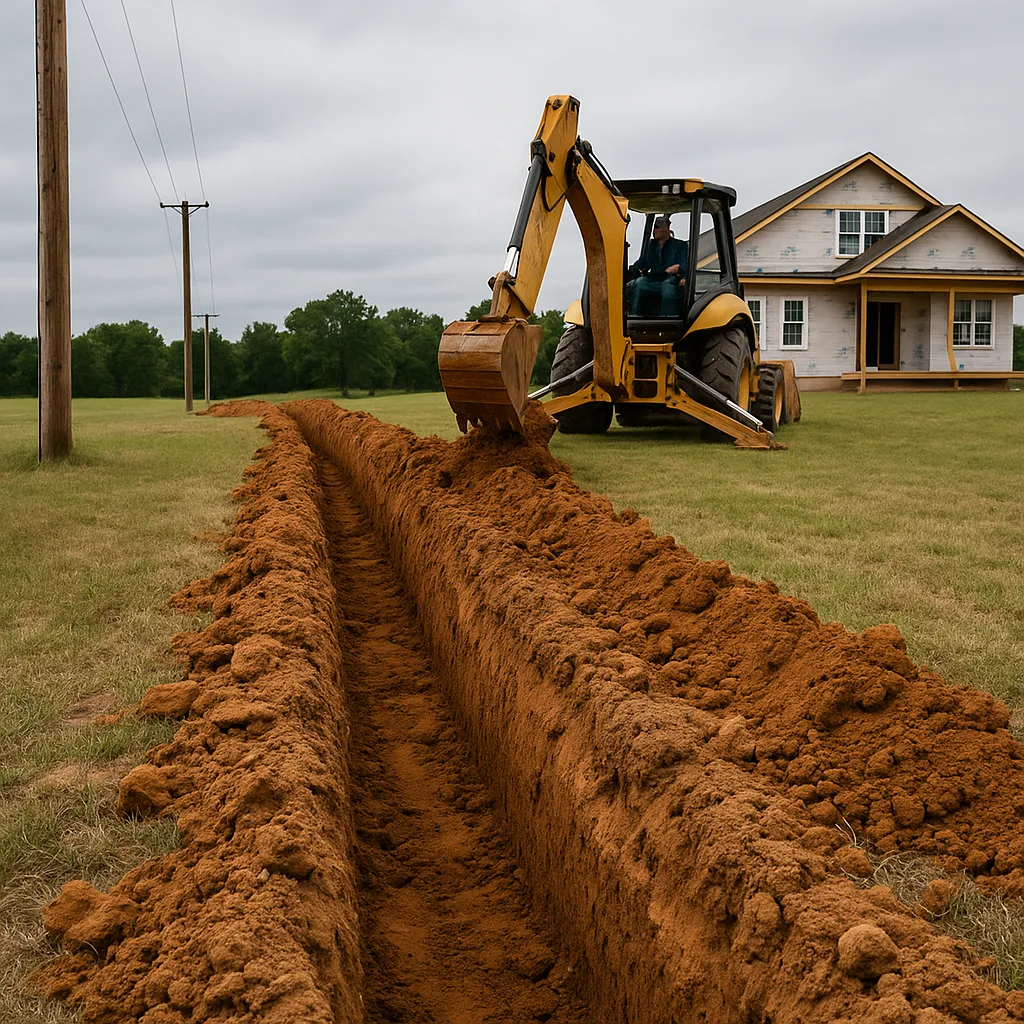
Building on your own land, most people assume electrical service is a quick call to the utility. In practice it’s the single most common cause of construction delays, because power is one of the longest-lead items in the entire build.
Start 6 to 12 months out
Between the initial utility consult, design (30–60 days), a 90-day contract window, and material lead times of 12 to 20 weeks, power planning routinely runs 6 to 12 months. Call the utility the day you close on the land, not the day construction starts. A “will serve” letter only confirms the utility can serve you. It’s the starting point, not the finish. Follow it with an on-site meeting with a utility estimator to pin down the home’s location, who’s responsible for what, the timeline, and the cost.
Underground, overhead, or both
- Underground. No visible lines and weather-resistant, but $10–$25 per foot plus trenching.
- Overhead. Cheaper and faster at $5–$15 per foot, but adds $2,000–$5,000 per pole.
- Combination. Overhead to the property line and underground to the house is often the practical middle ground.
Size it once, and don’t forget temporary power
A standard home is fine on 200-amp service; step up to 400 amps for a workshop, well pumps, EV charging, or heavy electric heat, and give the utility that number early so it can size the transformer. Plan temporary construction power alongside the permanent service. You need it from day one. Clarify who supplies what: utilities usually provide cable and conductors, while trenching, conduit, meter base, and backfill fall on you. Budget $5,000 to $25,000 or more overall, and expect many utilities to require payment upfront before ordering materials.
Map your utility costs before you close
SiteFacts measures the real distance to power, sewer, and water for any parcel, so the six-figure surprises show up before you're committed, not mid-build.