Tree Removal Site Prep: The Stump Holes That Stop Your Build
Backfilled tree stump holes are one of the most common hidden conditions on cleared lots, and one that can halt your foundation on day one. Here's how Oregon code treats them and how to plan ahead.
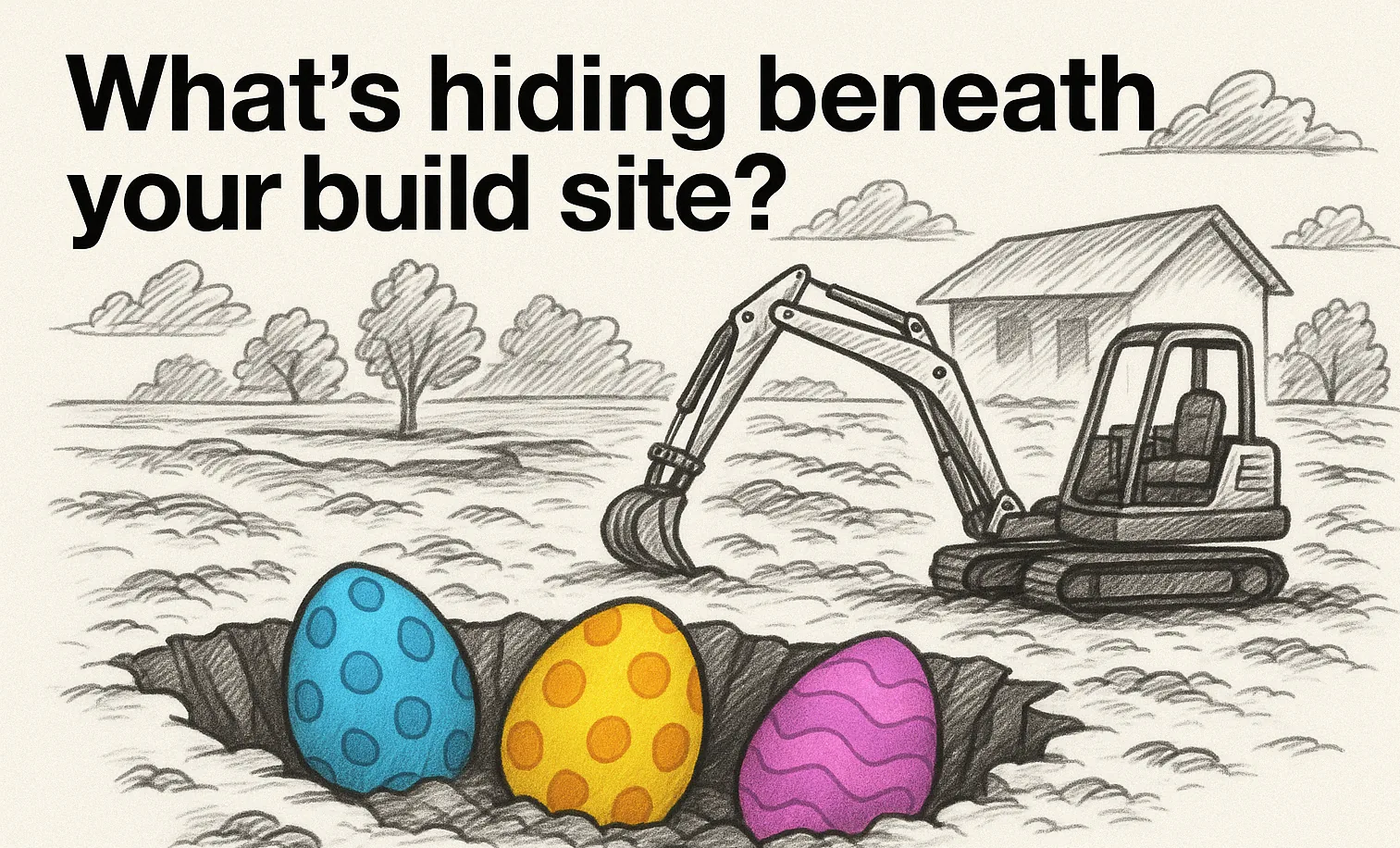
Clearing a lot feels like progress: open space where thick trees used to stand. But tree removal creates one of the most common hidden conditions under a future home: backfilled stump holes. On lots marketed as cleared and build-ready, they’re a top surprise found during foundation excavation, and they’re almost never disclosed, because they’re invisible at the surface. On the job we called them Easter eggs. Nobody was smiling when they found one.
Why the foundation has to sit on native soil
Oregon is clear on this. Under the Oregon Residential Specialty Code, sections R401.2 and R401.4, foundations must bear on undisturbed native soil or on engineered, compacted fill. A stump hole that was loosely backfilled, with no plan and no compaction, is a structural liability sitting right under the footprint. It looks fine from the surface. It settles later.
What happens when you hit one
The crew digs footings, everything looks good, then they hit a soft spot: loose, inconsistent, clearly backfill. The job stops. Now you have to:
- Excavate every bit of the fill material
- Keep digging until you reach solid native soil
- Bring in a geotech if the fill runs deeper than 12 inches
- Import gravel or structural fill
- Compact in lifts, sometimes with inspection or testing
The fix is a plan, not a soil scientist
- Mark stump locations before or during tree removal.
- Don’t backfill until your builder or geotech gives the green light.
- If you do fill, use proper materials and compact to spec.
- Assume any deep fill area could trigger extra cost.
- Talk to your excavation crew and builder early.
When disturbed fill runs more than 12 inches deep under the building footprint, most county building departments require a geotechnical engineer’s fill plan before issuing the permit: material specs, lift-depth requirements, compaction guidelines, and on-site sign-off. It isn’t cheap, but it’s far less than the foundation problems it prevents. Stump holes aren’t empty spaces. They’re liabilities. Mark them, respect them, and plan for them.
See what's under a cleared lot before you break ground
SiteFacts surfaces the hidden site conditions on cleared, build-ready parcels, so they get priced in, not discovered at excavation.