
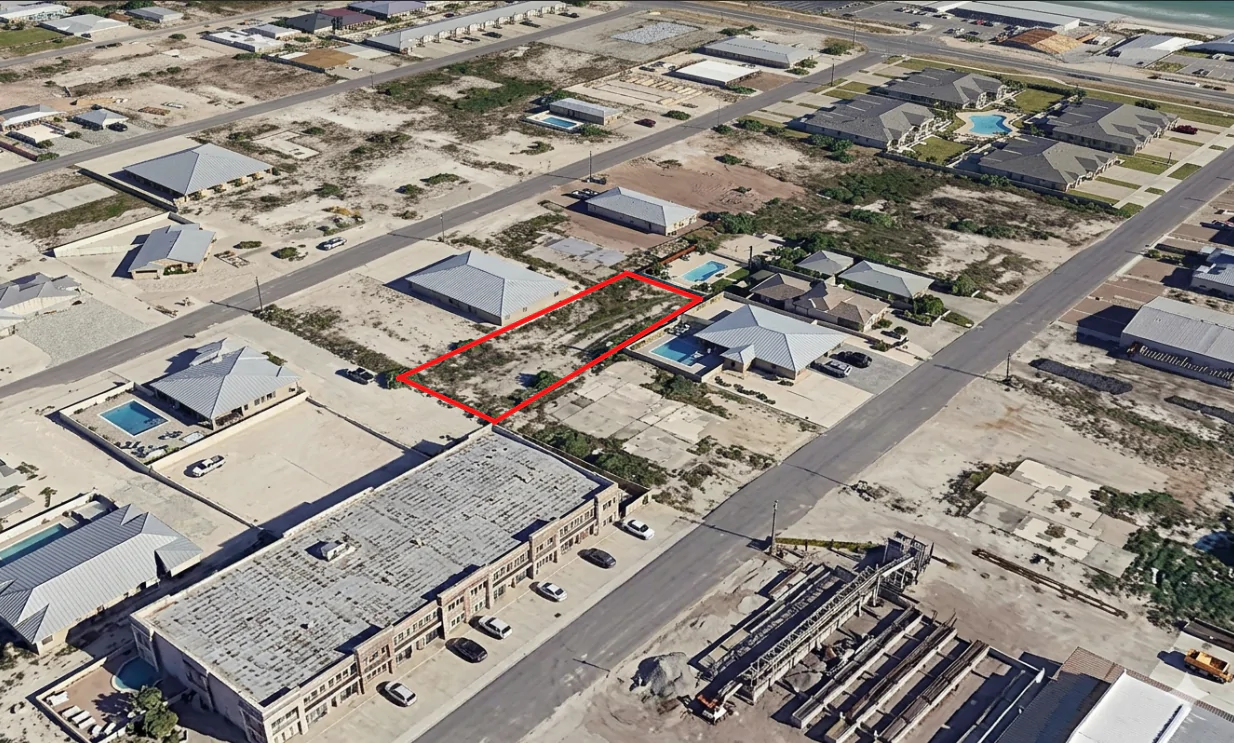
The Landlocked Lot That Wasn’t
A lot is landlocked when it has no direct legal access to a public road. The path to the street crosses a neighboring parcel and no recorded easement or legal right-of-way exists between them. A parcel can have a county tax ID, an address, and defined boundaries and still be functionally unbuildable without confirmed legal access. Confirming access requires researching adjacent parcel deed chains, not just the subject property.
A lot in the Florida panhandle sat off the market for years. Vacant. No takers. The reason was simple: nobody could confirm the parcel had legal access to a public road. Without access, you cannot get a building permit. Without a building permit, the lot is not a building lot. It is a patch of land with a tax bill attached.
That access problem was worth approximately $100,000 in equity to whoever solved it.
The flood zone risk sitting beside it was worth another $80,000 in construction cost exposure if someone missed it.
Up to $180,000 in combined value. The SiteFacts report that identified both findings cost less than $500.
That gap between what a standard title report covers and what actually determines whether a lot is buildable is exactly why pre-offer due diligence exists. A title search tells you who owns the land and whether the deed chain is clean. It does not tell you whether you can build on it, how you get to it, or what it will cost to develop. Those are different questions. They require different research.
Here is what happened on this property, what was found, and what it means for anyone making a land purchase offer today.
The Property and Its History
The lot is small. About 0.16 acres in a small Gulf Coast town, part of a subdivision that was platted in the 1950s. On that original plat, the parcel was not a building lot at all. It was mapped as a drainage channel between two residential blocks.
Drainage channels do not get lot numbers. They do not get street frontage. They are infrastructure, meant to move water, not support a house. This parcel was never intended to be developed.
Decades passed. Through a series of deed conveyances, the parcel was carved into something that looked like a buildable-sized lot. The county gave it a tax ID. The county assigned it an address. On paper, it had the shape of a buildable lot.
What it did not have was legal access to a public road. Because it had started life as infrastructure, it had inherited none. The lots surrounding it had been carved from different origins. The pathway from this parcel to the street ran across a neighboring lot that belonged to someone else.
That is what “functionally landlocked” means. The parcel exists. It has boundaries. It has an address. But without a legal right to cross the neighboring lot to reach the street, no building department will approve a permit on it. The property was stuck.
What Had Already Been Tried
When a property sits unsold for years in a market where land moves, there is usually a reason. Buyers had looked. The city had been contacted. A title report had been run.
None of those steps resolved the access question.
The city’s records search came back without confirmation. Access for this parcel was not something the city could validate from their files. That answer is not a no. It is not a yes. It is a dead end that most buyers treat as a no.
The title report found something, but could not close the loop. It referenced an easement tied to the original 1950 plat. That reference pointed to an attached appendix. The appendix was not attached. The title company had surfaced a document reference without being able to confirm what the document actually said or whether the easement it described was still valid, recorded, and enforceable.
A title search works by examining one parcel. It follows the deed chain for the subject property and confirms clear ownership. It is not designed to trace easement rights that may run through adjacent parcels, may have been created by common ownership decades ago, or may exist as physical monuments on the ground without a clean paper trail leading back to a single document.
The methodology was not wrong. It was just the wrong tool for the question being asked.
The Research Approach: Three Parcels, Not One
A SiteFacts report on this property started with a different scope.
To understand whether access existed, the research had to look beyond the subject parcel. The question was not just what documents were recorded against this lot. The question was how this lot related to the parcels between it and the street, and what rights had been created between them through deeds, conveyances, and common ownership over time.
Three parcels were researched: the subject parcel itself, the lot that sat between it and the street, and the parent parcel that both lots had originally been carved from.
That is the methodology gap. A title search examines one parcel. We researched three. That is how an easement the title company had referenced but could not validate was found, confirmed, and documented.

Finding 1: The Easement That Was Already There
The three-parcel deed research turned up a Warranty Deed. A Warranty Deed is a property transfer document in which the seller guarantees clear title and the right to convey. This particular Warranty Deed created a surveyed access easement across the neighboring lot.
An easement is a legal right to use someone else’s property for a specific purpose. An access easement means the holder of that right can cross the neighboring property to reach a road. This one was surveyed, meaning the pathway had defined boundaries, not just a general right to pass through.
The easement was recorded. Physical monuments were in the ground marking the easement path.
The document had not been lost. It had not been created after the fact. It was already there, recorded in the county system, tied to a Warranty Deed in the deed chain of the parcels researched. The title company had found a reference to the 1950 plat easement. What the three-parcel research found was a separately recorded, surveyed, physically marked easement that ran with the land.
A recorded easement that runs with the land means it transfers with every future sale. It does not need to be renegotiated. It does not expire. The lot that had sat vacant for years because nobody could confirm access had a confirmed, recorded access right the entire time.
That finding is worth approximately $100,000 in unlocked equity on a lot that the market had written off as unbuildable.
There is also a backstop worth understanding. Under Florida law, when two parcels were under common ownership for more than 50 years and one of them has no access to a public road without crossing the other, courts can recognize an easement by necessity. An easement by necessity is a legal doctrine that says no parcel should be completely landlocked when there is a history of common ownership with an adjacent parcel that does have access. The recorded easement in this case was the primary finding. The easement by necessity doctrine was the backstop confirming the legal framework would have supported access even if the recorded document had not been found.
Both supported the same conclusion: this lot had access. It was not landlocked.
Finding 2: The Flood Zone the Listing Got Wrong
The access finding would have been enough to justify the report. The flood zone finding added another dimension.
The property listing described the lot’s flood risk in terms that implied minimal exposure. Standard language in many listings for properties that the seller believes are in a lower-risk zone.
A SiteFacts report confirmed the property’s actual FEMA designation: Special Flood Hazard Area, Zone AE.
Zone AE is the highest-risk flood classification under FEMA’s National Flood Insurance Program. It means there is at least a one percent annual chance of flooding, and elevations have been specifically determined by FEMA engineering studies. Zone X, the lower-risk designation, has no such analysis behind it and requires neither flood insurance nor elevated construction.

Building in Zone AE instead of Zone X changes the construction math significantly.
The cost difference is significant. Building in Zone AE requires an elevated foundation instead of a standard slab-on-grade, mandatory flood insurance as a condition of any federally backed financing, an elevation certificate that establishes the structure’s height above the base flood elevation, specialized engineering to meet those elevation requirements, and different height measurement rules that affect what counts toward setback and height limit calculations.
That package of additional requirements adds approximately $80,000 to construction costs compared to a property correctly classified as low-risk.
A buyer who relied on the listing’s description of flood risk and made an offer without verifying the FEMA designation would have discovered this $80,000 cost increase during construction, not before it. At that point, the offer is signed, the earnest money has moved, and the deal is either dead or the buyer absorbs the cost.
Additional Findings
The zoning research surfaced a code classification that appeared to reference a category no longer in the active code. Research into ordinance amendment history and a code rewrite confirmed the classification was valid. The zoning was current. The reference just required knowing where to look.
One more item: a building permit reference was found in the metadata of a PDF file. Not in the body of the document. Not in the header. In the filename the seller had saved it under. That kind of detail is not visible in a standard records search. It required looking at the file itself, including what it had been named before it was shared.
The Value Math
Two findings. One pre-offer report.
The access finding unlocked approximately $100,000 in equity on a parcel the market had priced as unbuildable. The flood zone finding identified approximately $80,000 in construction cost exposure that a buyer would have absorbed without knowing it was coming.
Up to $180,000 in combined value. The report cost less than $500.
The ratio is the point. Due diligence at this stage of the deal costs a fraction of what the information is worth. The question is not whether you can afford a SiteFacts report. The question is whether you can afford to make an offer without one.
The information did not create the value. It revealed the value that was already there.
The question is not whether you can afford a SiteFacts report. The question is whether you can afford to make an offer without one.
What This Means for Pre-Offer Due Diligence
There are two ways a due diligence finding creates value.
The first is offensive. You find something nobody else found. A lot the market wrote off as unbuildable has a confirmed access easement. You know it. Other buyers do not. That information advantage is worth whatever the market would pay for a confirmed-buildable lot versus an assumed-unbuildable one.
The second is defensive. You find something that would have cost you money you did not plan to spend. A flood zone designation that changes your construction budget by $80,000. That is not a finding that makes the deal better. It is a finding that tells you what you are actually buying before you sign the purchase agreement.
Both types of value exist on the same property in this case. That is not always true. Sometimes a report confirms the lot is exactly what the listing described. That confirmation has value too. It is the difference between offering with confidence and offering with uncertainty.
SiteFacts sits upstream of the attorneys, surveyors, and title companies in the deal timeline. Nobody hires those professionals on a property they have not decided to bid on. SiteFacts is the screening layer that tells you whether to engage those professionals, and what to tell them to look for.
The deal timeline is: SiteFacts report, then offer, then attorney and surveyor and geotech, then close.
The Professional Handoff
The SiteFacts findings on this property are research outputs, not legal opinions. The easement finding identifies a recorded instrument. Whether that easement is enforceable, sufficient for a lender’s requirements, and clear of any competing claims is a question for a real estate attorney licensed in Florida.
The flood zone finding identifies the FEMA designation and the cost categories it triggers. The actual engineering requirements for a specific structure on this specific lot belong to a licensed structural engineer and a geotech.
Before closing on any land purchase, hire the attorney. Hire the surveyor. Hire the geotech. These professionals have responsibilities that SiteFacts does not. What SiteFacts provides is the intelligence that tells you which professionals you need and what questions to bring them before money moves.
A title search protects the lender. Due diligence protects the buyer. Those are different jobs, and both need to be done.
Before You Make the Offer
The lot in this case had an access easement recorded in the deed chain of adjacent parcels, a FEMA flood zone designation that differed from the listing’s description, a zoning classification that required ordinance research to confirm, and a building permit reference buried in a PDF filename.
None of that was visible from the listing. Some of it was not visible from the city’s records. The title report found a reference to an easement it could not validate.
The lot in this case study was not unusable. It was underresearched.
SiteFacts has completed 250+ pre-offer due diligence reports across 115+ jurisdictions as of Q2 2026. Every report is reviewed by a SiteFacts analyst before delivery. In this Florida panhandle case study, a single pre-offer report confirmed a recorded access easement across three parcels, unlocking approximately $100,000 in equity on a lot the market had written off, and identified a FEMA Zone AE designation the listing had not accurately described, representing approximately $80,000 in construction cost exposure. Report cost: under $500.
If you are looking at a vacant lot and wondering what is actually there, run a report before you make an offer.